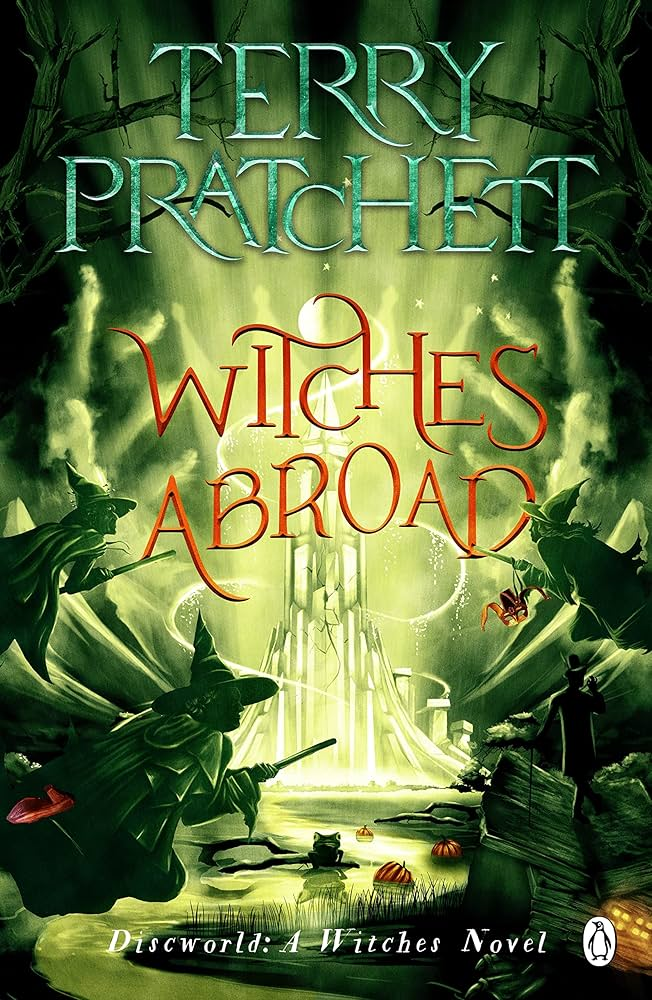
By Sir Terry Pratchett
This is a great book in the continuation of the Witches series. My connection to this series is due to my dad, outside of the fact that my dad has read the Tiffany Aching books to me over the years. One year on my birthday, my parents gave me my first iPod and among other things on it was the audiobook Carpe Jugulum. Throughout my childhood, we shared an Audible account, meaning that if I wanted to get another audiobook, I would pay my parents. But anything that was written by Sir Terry Pratchett they gave me a 50% discount.
“You can’t go around building a better world for people. Only people can build a better world for people. Otherwise it’s just a cage.
There’s power in stories. The fairy godmother is good. The servant girl marries the prince. Everyone lives happily ever after… don’t they?
The witches Granny Weatherwax, Nanny Ogg and Magrat Garlick are travelling to far-distant Genua to stop a wedding and save a kingdom. But how do you fight a happy-ever-after, especially when it comes to glass slippers and a power-hungry fairy godmother who has made destiny an offer it can’t refuse?
It’s hard to resist a good story, even when the fate of the kingdom depends on it….”
This is an interesting mash-up between a travel story and an experimentation on how many story references you can fit in to one novel.
Before we get on to Witches Abroad we need to get on to the promises I made in my Wyrd Sister review. We need to talk about Tomjon. He is the king’s son, but he was sent to live with actors to keep him safe, so that is the way he was raised. When it comes to the part of the story where he is “supposed” to become king, he doesn’t want it. This is an interesting comparison with Magrat and the Fool because he chose to stay with the job he was raised in.
For this story, I have three thoughts
Firstly, as I said in the spoiler-free review, there are a heck of a lot of story references in this book. From what I caught, there are references to The Hobbit, Dracula, The Wizard of Oz, Sleeping Beauty, Little Red Riding Hood, Cinderella and the Frog Prince. If I have forgotten anything, please let me know. The most fascinating thing about this is the fact that except for the first two, all of these stories are forced to the detriment of the people inside them.
Secondly, Genua, more specifically, the way the people are punished for not playing their role and their job. For example, the toy maker who is put on trial for not telling stories to the children. Having read the book I generally wonder if the creators of Shrek had read the book because this feels a lot like Dulak.
Thirdly, Lily Weatherwax. If you were to look at a witch and a fairy godmother, you would have an assumption about who would be the good one. Only Sir Terry Pratchett would shift that around. Lily Weatherwax has worked hard to make the stories happen, whether that means driving a wolf mad with just a small amount of human and forces Ella to marry someone she doesn’t want to just for the story. In the Tiffany Aching books, we hear that treating people as things is the most evil thing, whereas Granny Weatherwax actually gives people the help they need.
I enjoyed this book, and I hope you will too. And until next time.
Happy reading to all and to all a good night.
 The Last One To Talk
Leave a comment